
Professors Lucrezia Lopez, director of CETUR, and Mar Durán, coordinator of the ULTRAMAR group, participated in an international meeting held in Budapest from March 27 to 30 as part of the European project EUniWell. The two researchers from IDEGA traveled to the Hungarian capital to attend a seminar organized by the Institute of Mental Health at Semmelweis University of Budapest, within the framework of the Pilgrim-Aphy-Tour project (Pilgrimage As Well-being Therapy: Exploring Mental, Physical and Social Benefits of Walking Pilgrimage), led by Lopez. Teams from the University of Florence (UNIFI) and Taras Shevchenko National University of Kyiv (KNU) also participated in the meeting, in addition to USC and the host university, thus reinforcing the international dimension of the project.
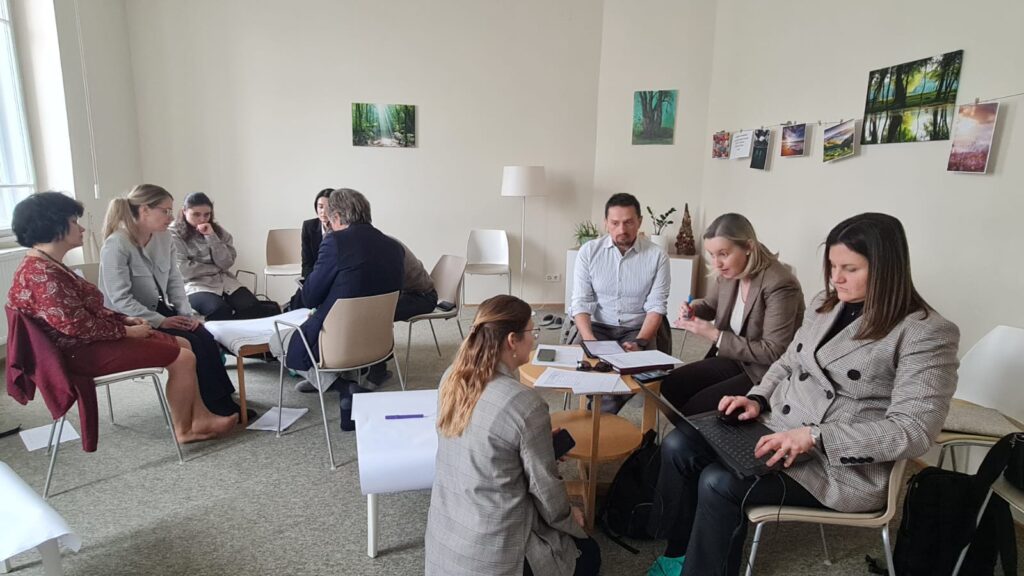
The program took place at the facilities of the Institute of Mental Health at Semmelweis University. The teams analyzed the current state of the project, reviewing research progress, publishing plans, next steps, and the potential dissemination of initial results, as well as organizational matters related to the pilgrimage to Santiago. On Saturday afternoon, a public lecture session took place, attended by members of the Hungarian pilgrim community and other interested parties, fostering dialogue, knowledge sharing, and collaborative networking.
The lecture, led by the IDEGA faculty and researchers, was titled “The Camino de Santiago: A Polysemic Route. Present Dynamics and Future Perspectives.” It addressed the current dynamics of the Camino, highlighting its future prospects and the need for further study of the different pilgrim profiles and their motivations, particularly health and its therapeutic function. Furthermore, it emphasized that analyzing these social and environmental dynamics is fundamental for promoting more sustainable tourism and territorial planning adapted to current challenges.
This in-person meeting generally provided a key opportunity to strengthen academic and research collaboration among the participating universities, fostering the direct exchange of knowledge and experiences. During these sessions, the researchers also worked on developing new lines of joint research and proposals aimed at consolidating international cooperation and expanding the project’s scientific impact. This collaborative workspace allowed them to identify synergies among the teams, explore future joint publications, and advance in defining initiatives that reinforce the interdisciplinary dimension of the research.
A Project on Pilgrimage and Holistic Health
The Pilgrim-Aphy-Tour project focuses on studying the benefits of walking pilgrimages for mental, physical, and social well-being. To this end, the team will conduct applied research based on the development and analysis of questionnaires for pilgrims and walkers, as well as interviews with various local stakeholders along the pilot routes. The study adopts a comparative perspective based on three major European pilgrimage routes: the Camino de Santiago, the Via Francigena, and the Camino de María. This analysis will identify the therapeutic potential of each route, highlighting both their similarities and their unique characteristics.
As the project draws to a close, the final event is planned for Santiago de Compostela, where public sessions will also be held to share the research findings with the community and foster dialogue among the academic community, local stakeholders, and those interested in pilgrimage and well-being.