
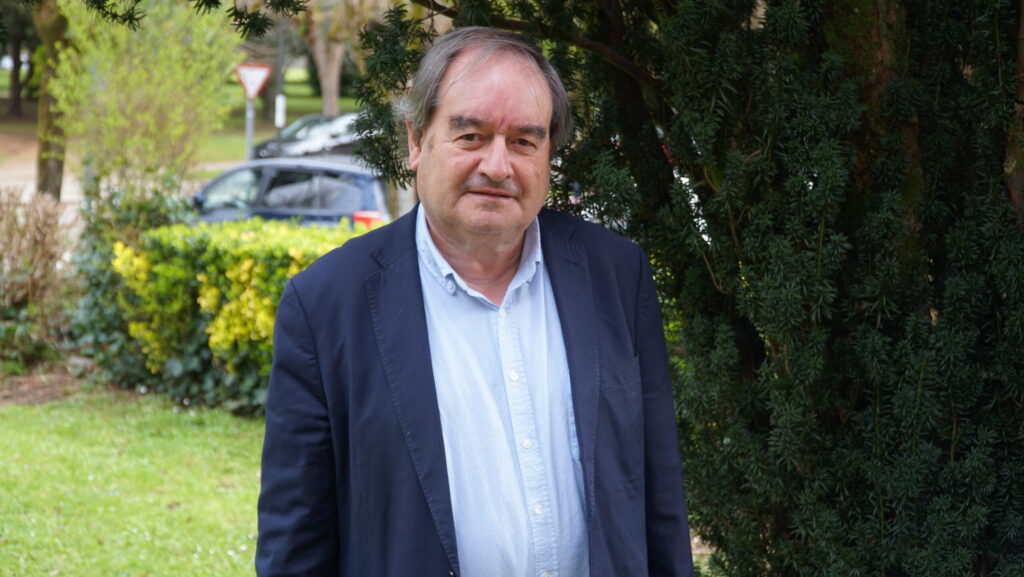
The director of IDEGA and professor of Regional Geographic Analysis, Rubén C. Lois, warned in an interview on Radio Galicia-Cadena Ser about the precarious situation of Santiago-Rosalía de Castro Airport and the need to redefine Galicia’s connectivity and tourism promotion strategy.
Segundo explained that the sharp drop in passengers recorded in recent months does not imply an exhaustion of the Santiago tourism model, but rather is mainly due to Ryanair’s partial withdrawal and the reduction of connections by Iberia. Lois believes that Santiago “remains a major destination in northern Spain,” although he insists that there is an excessive dependence on a single low-cost airline.
In the interview, broadcast on the program La Ventana de Galicia, the researcher stressed that Galicia must commit to diversifying its air connections and attracting new operators to guarantee greater stability for the airport system. He also called for greater institutional involvement to strengthen strategic connections, especially the route to Madrid.
Rubén Lois also drew attention to some of the challenges currently facing the Santiago de Compostela destination, such as rising prices for tourism offerings and the perception of overcrowding during certain times of the year. He explained that these factors can affect the length of stays and the destination’s competitiveness.
The director of IDEGA defended the need to adapt the tourism model to a more competitive environment, focusing on new visitor profiles and better coordination between public administrations and the private sector. In this regard, he praised the work of airport coordination bodies, although he called for concrete results to strengthen Galicia’s connectivity.