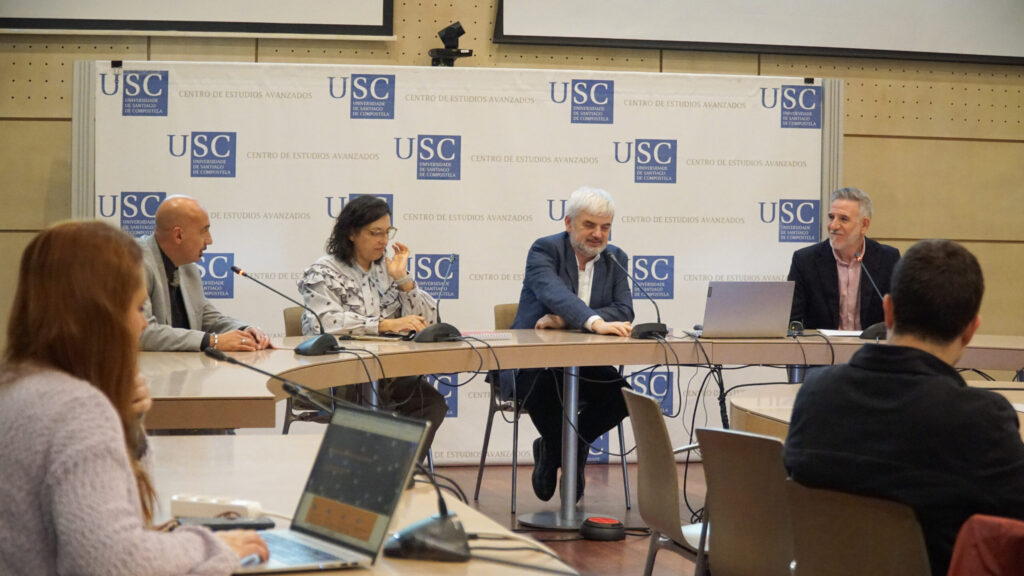
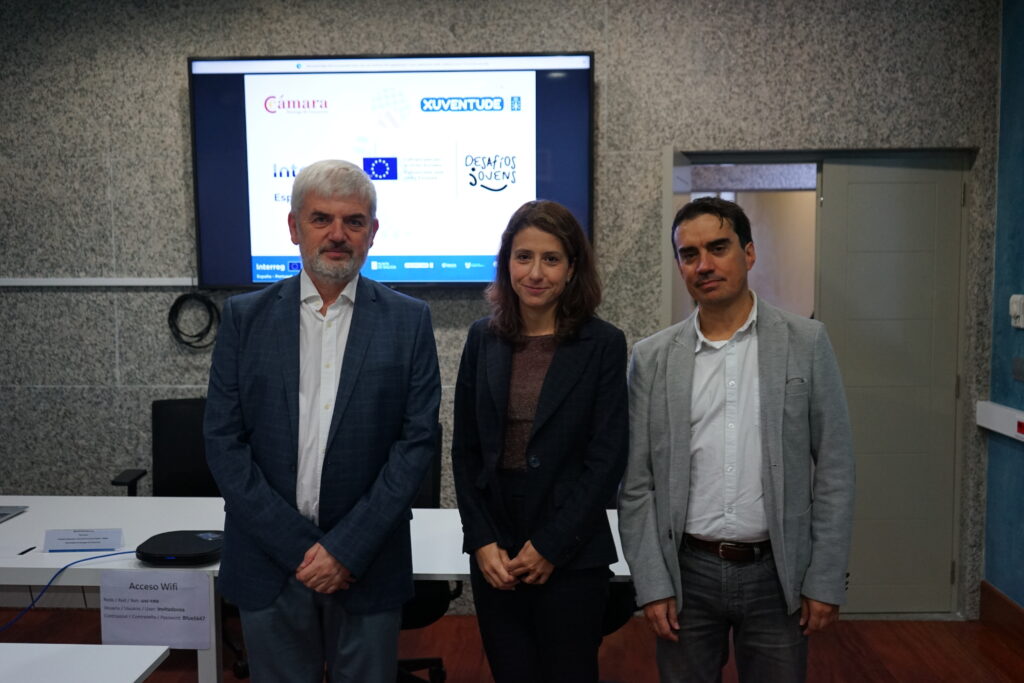
The University Institute for Galician Studies and Development (IDEGA) took part in the “Desafíos Jovens” project—a cross-border cooperation initiative led by the Chamber of Commerce—aimed at improving employment and entrepreneurship opportunities for young people in the Galicia–Northern Portugal Euroregion.
The project, now reaching its final phase, was established to foster the labor market inclusion of young people—particularly those living in rural areas—through training, support, and guidance initiatives. Key areas of focus included enhancing digital and innovation skills, promoting mobility, fostering entrepreneurship, and facilitating access to sectors with growth potential, with a special emphasis on the green economy and the social economy.
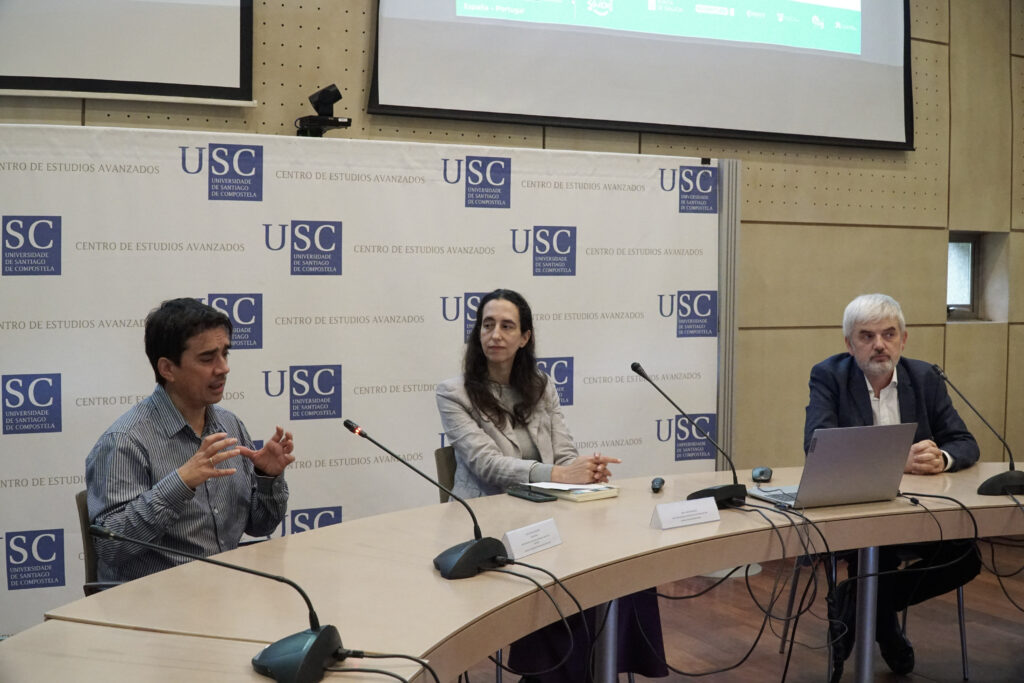
IDEGA contributed to the project’s objectives by collaborating on awareness-raising activities and workshops held at the Center for Advanced Studies (CEA). One of the project’s most notable outcomes is the creation of five practical guides, designed to support the integration of different groups into the labor market while facilitating the participation of businesses. These guides address the inclusion of people with disabilities, female leadership, generational succession, the integration of migrants, and the organizational preparation required to welcome and support participants.
Regarding the inclusion of people with disabilities, the work focuses on sectors such as the agri-food industry, highlighting opportunities linked to digitalization, precision agriculture, the use of drones, and data analysis. In the area of female leadership, the project identifies opportunities in fields such as the bioeconomy, sustainable tourism, and renewable energy, while also providing tools to foster more inclusive business environments. The guide on generational succession addresses one of the major challenges facing the rural business sector: ensuring the continuity of enterprises and facilitating the integration of new generations. Meanwhile, the initiative aimed at migrants seeks to better leverage their talent and mitigate “brain waste” by facilitating processes such as the formal recognition of academic and professional qualifications, language and technical training, and intercultural mentoring.
As a common element across all these pathways, the Cross-Cutting Guide to Business Integration provides guidelines for the onboarding, awareness-raising, and ongoing support of individuals joining these companies—particularly during the initial months of their integration.