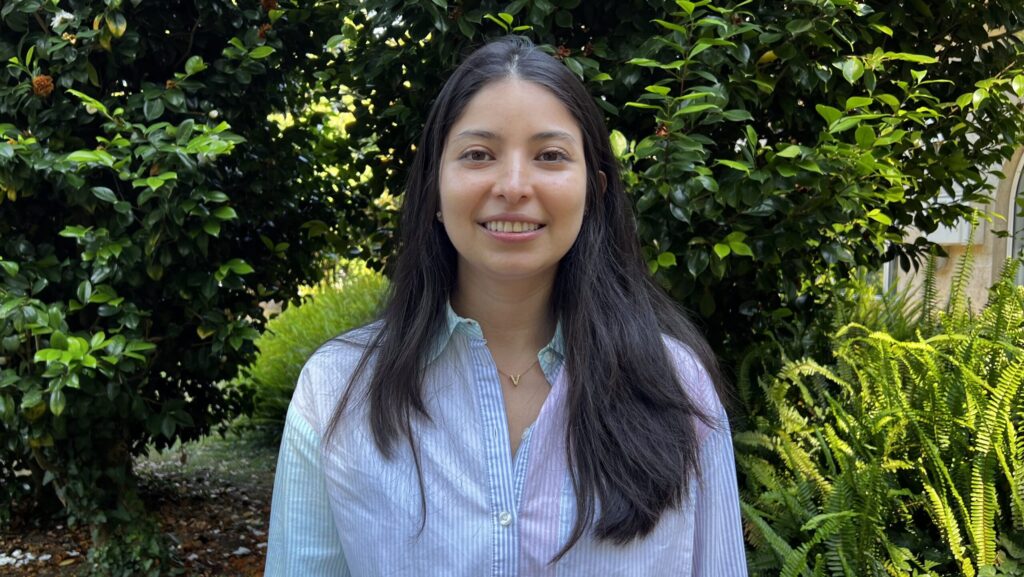
A team from the University Institute for Studies and Development of Galicia (IDEGA) has registered a new methodology with the Intellectual Property Office. This methodology allows for the development of economic and environmental analyses with a level of territorial detail far superior to that offered by conventional tools. It is called Path-Q-Plus for the interregionalization of input-output accounting frameworks, research developed in the doctoral thesis of economist Uvenny Quirama Estrada, supervised by Professors Xesús Pereira López and Melchor Fernández Fernández, who are also listed as authors of the registration.
The so-called input-output accounting frameworks (that is, statistical systems that describe how different industries are related: who produces, who buys, and who uses these goods and services) constitute a fundamental tool for measuring the impact of economic activities. However, these models are typically established for broad territorial areas, offering less information about the functioning of smaller regions.
The methodology developed at IDEGA allows this information to be transferred to these smaller territorial scales to obtain an accurate representation of the economic connections existing between different areas.
As part of Quirama’s thesis, the first validation exercise was carried out in Galicia. The researcher defined five major functional areas—A Coruña, Lugo, Ourense, Santiago, and Vigo—using work-related travel as the main criterion; that is, where people live and where they work. From this information, it was possible to locate the main production centers and more precisely characterize the territorial distribution of economic activity.
This analytical capacity opens new possibilities for the design of public policies and development strategies adapted to the specific characteristics of each territory. In addition to measuring economic impacts, the methodology facilitates the evaluation of social and environmental effects, providing more detailed information for planning and decision-making. Secondly, as researcher Uvenny Quirama Estrada points out, the objective is to have tools that allow for a better understanding of territorial diversity and to adapt public policies to the real needs of each area of study.